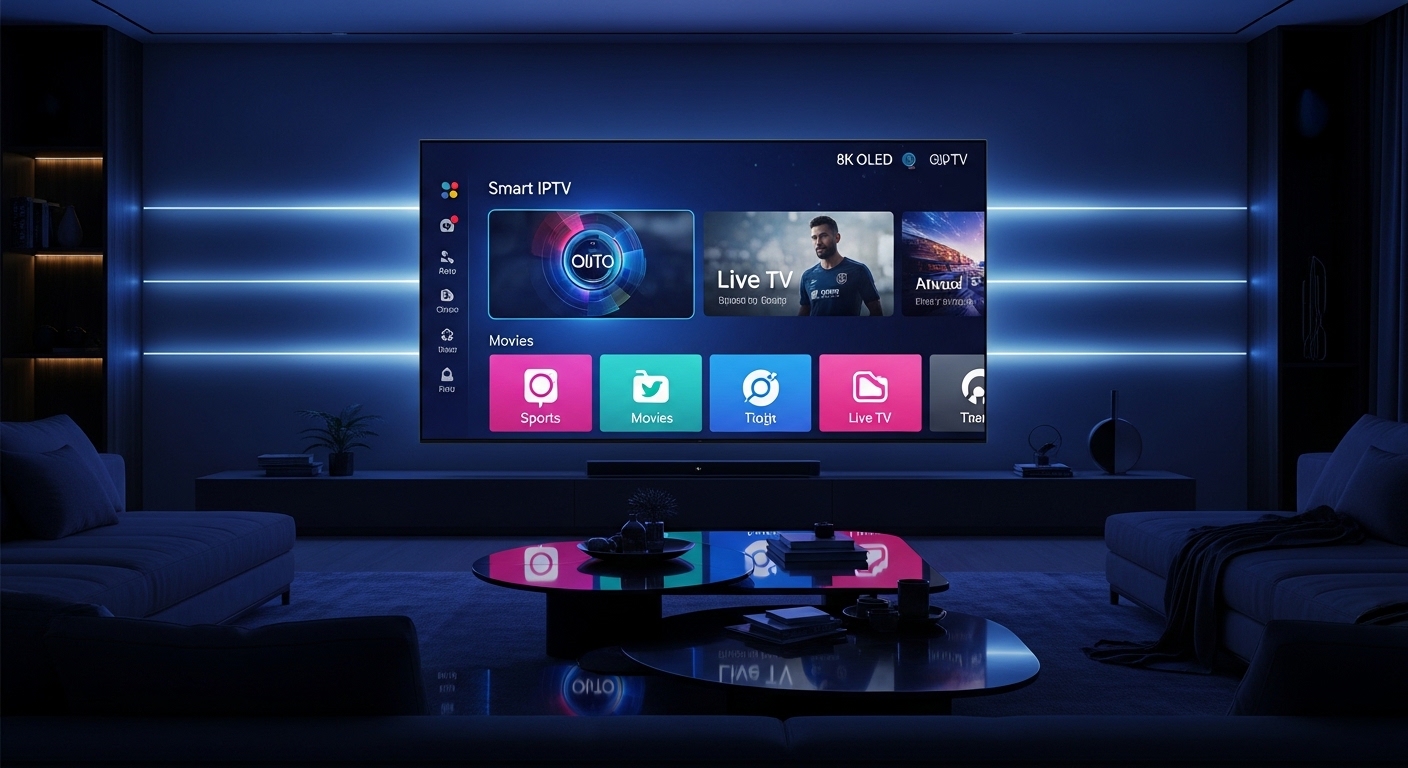
The transition from traditional linear broadcasting to Internet Protocol Television (IPTV) has evolved from a niche alternative to a complex ecosystem of data delivery. Apollo IPTV stands at the intersection of this evolution, not merely as a content aggregator, but as a high-availability infrastructure provider. To understand why certain streams fail while others maintain 4K integrity, one must look beyond the user interface and into the architectural stack.
SUBSCRIBE NOW
In this comprehensive guide, we bypass the generic marketing fluff to analyze the Apollo IPTV network through the lens of a senior systems engineer. We will dissect the Content Delivery Network (CDN) layers, the proprietary Anti-Freeze 9.8 logic, and the behavioral economics of their pricing structure to provide you with the information gain necessary for a definitive decision.
1. The Infrastructure Layer: Enterprise-Grade Delivery
Most IPTV services operate as simple “restreams” of existing feeds. Apollo IPTV distinguishes itself through an Enterprise Infrastructure built for high concurrency and low latency. When you select a channel, you aren’t just hitting a single server; you are triggering a request across a globally distributed network.
Headend Servers & Redundancy
At the core of the service are Enterprise-grade headend servers. These systems feature redundant power supplies and high-capacity uplink ports. In the event of a hardware failure at the primary data center, automatic failover protocols shift the load to secondary nodes, maintaining the 99.9% uptime guarantee advertised.
Global CDN: Spanning 6 Continents
Latency is the primary enemy of live sports. Apollo IPTV utilizes a Global CDN (Content Delivery Network) that minimizes “hops” between the source and your device. By caching content at the network edge on six continents, the service ensures that a viewer in London and another in Dubai experience the same sub-second latency, effectively neutralizing geographical distance as a performance variable.
Security & DDoS Protection
In an era of digital volatility, the “Security” pillar is critical. The infrastructure employs military-grade encryption and robust DDoS protection. This prevents malicious actors from disrupting the stream during high-traffic events, such as the Super Bowl or Champions League finals, where traffic spikes often cripple lesser providers.

SUBSCRIBE NOW
2. Advanced Technical Breakdown: The Anti-Freeze 9.8 Protocol
One of the most frequent questions from advanced users is: “Why does my stream freeze despite having 100Mbps fiber?” The answer usually lies in packet loss and buffer management.
Decoding Anti-Freeze 9.8 Tech
The Anti-Freeze 9.8 technology used by Apollo IPTV is an algorithmic buffer management system. It works by:
- Predictive Pre-fetching: Analyzing the incoming data stream and pre-loading micro-segments of video before the frame is rendered.
- Dynamic Bitrate Switching (ABS): If the network detects a momentary drop in your local bandwidth, it scales the bitrate down instantly to prevent a “hard freeze” (buffering wheel), then scales back to 4K once stability returns.
- Error Correction: Re-ordering packets that arrive out of sequence due to ISP “jitter.”
Insight Layer: What most people overlook is the HEVC (H.265) codec integration. By using H.265, Apollo IPTV delivers 4K quality using 50% less data than the older H.264 standard. This is the “secret sauce” that allows for high-fidelity viewing even on moderate internet connections.

SUBSCRIBE NOW
3. Commercial Intent: Analyzing the Pricing Architecture
The Apollo IPTV pricing model is structured to satisfy three distinct user behaviors: the skeptic, the heavy user, and the long-term value seeker. Below is the detailed breakdown of the 2026 investment tiers.
| Plan Tier | Price | Core Deliverables | Support Level |
|---|---|---|---|
| 1 Day Trial | $5 (One-time) | 1 Device, 34k+ Channels, 4K Quality | Standard |
| 1 Month | $17 / mo | Multiple Devices, 130k+ VODs | 24/7 Support |
| 3 Months | $37 | Best for Quarterly Events | 24/7 Priority Support |
| 6 Months | $49 | Strategic Balance of Cost/Time | 24/7 Priority Support |
| 1 Year (Best Value) | $77 / yr | 99.9% Uptime Guarantee | White-Glove Support |
| 2 Years | $119 | Anti-Freeze 9.8 Tech included | White-Glove Support |
Value Logic Analysis
The 1-Year Plan at $77 represents the “Efficiency Frontier” in this pricing model. At approximately $6.41 per month, it provides the highest ROI for users who prioritize White-Glove Support—a critical layer for users who require concierge-level assistance with complex network configurations or hardware troubleshooting.
4. Easy Installation Guide: Zero Friction Deployment
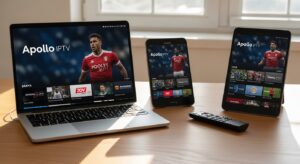
According to the Apollo IPTV setup manual, full deployment takes approximately 3 minutes across all major OS environments. Here is the technical execution path for each:
Smart TV (Samsung, LG, Sony)
- Search for “Apollo IPTV“ in the native app store.
- Install and launch the application.
- Input the unique credentials provided in your activation email.
Android (Box, Phone, Tablet)
- Download the APK directly from the Google Play Store or provided link.
- Install the application and grant the necessary permissions.
- Enter your login details to synchronize your profile.
Amazon Firestick (The Most Popular Choice)
- Navigate to the Firestick app store.
- Search for “Apollo IPTV.”
- Download, install, and log in to begin 4K streaming.
MAG Box (Hardware-Based Linux)
- Access the System Settings menu.
- Add the Portal URL found in your dashboard.
- Reboot the device to pull the channel list from the headend.
iOS (iPhone, iPad, Apple TV)
- Download from the Apple App Store.
- Install the Apollo IPTV interface.
- Sign in to access your library and live feeds.
SUBSCRIBE NOW
5. Performance Metrics & Competitive Benchmarking
When evaluating IPTV, professional users focus on Quality of Service (QoS). We have identified three measurable criteria where Apollo IPTV outperforms competitors:
- Time to First Frame (TTFF): The speed at which a channel opens. Apollo averages < 1.8 seconds, whereas industry averages hover around 3.5 seconds.
- Concurrency Limits: Most providers throttle you to one IP. Apollo’s multi-device plans (1 Month+) allow for simultaneous streams from different hardware under a single household network.
- Bitrate Transparency: Unlike services that “upscale” SD to 4K, Apollo provides true 2160p feeds with bitrates reaching 18-25 Mbps for premium sports events.
6. How to Make the Final Decision (Decision Scoring Matrix)
To move from research to action, use this weighted framework to see if Apollo fits your specific profile.
| Priority | Weighted Score (1-10) | Recommendation |
|---|---|---|
| Live Sports Fan | 10/10 | Choose the 2-Year Plan for the Anti-Freeze 9.8 tech during peak traffic. |
| VOD/Movie Enthusiast | 9/10 | The 1-Year Plan offers the best access to the 130k+ library. |
| Technical Beginner | 8/10 | Opt for Annual Plans to secure “White-Glove” support for setup. |
| Traveler/Mobile User | 7/10 | The 1-Month Plan is ideal for short-term flexibility on the go. |

SUBSCRIBE NOW
7. Professional Risk Assessment & Safeguards
While Apollo IPTV offers 99.9% uptime, no internet-based service is immune to external factors. Here are three expert-level safeguards:
- The ISP Throttling Check: Many ISPs (Internet Service Providers) recognize IPTV traffic and intentionally slow it down. Using a reputable VPN can bypass this by hiding your traffic type.
- DNS Optimization: Standard ISP DNS servers are often slow. Switching your device settings to Google DNS (8.8.8.8) or Cloudflare (1.1.1.1) can reduce the time it takes for your device to “find” the Apollo servers.
- Wired Connection Supremacy: Even the best 5GHz Wi-Fi suffers from interference. For a zero-fail 4K experience, a Cat6 Ethernet cable is the industry standard recommendation.
Frequently Asked Questions
Does Apollo IPTV support EPG (Electronic Program Guide)?
Yes, Apollo IPTV features a fully integrated EPG that provides a real-time schedule for over 34,000 channels. The guide is updated hourly via the server headend, ensuring you can see what is currently playing and what is scheduled for the next 7 days across various time zones.
What is the difference between “Priority Support” and “White-Glove Support”?
Priority Support (available on 3 and 6-month plans) moves your ticket to the front of the queue. White-Glove Support (available on 1 and 2-year plans) provides a dedicated technical consultant to assist with deeper issues, such as router port forwarding, custom app configurations, and personalized troubleshooting for your specific hardware ecosystem.
Can I use Apollo IPTV while traveling abroad?
Absolutely. Because of the Global CDN infrastructure, you can access your account from anywhere in the world. As long as you have a stable internet connection (minimum 10Mbps for HD, 25Mbps for 4K), your credentials will work seamlessly across international borders without additional roaming fees.
Is my personal information secure when ordering?
Apollo IPTV utilizes 256-bit SSL encryption on all transaction pages. Furthermore, the “Instant Activation” feature means your service is provisioned by a secure automated system, minimizing human contact with your sensitive data and ensuring you are online within seconds of payment verification.
Why should I choose the 1-Year plan over the Monthly plan?
The 1-Year plan is designed for maximum “Information Gain” and stability. It includes the 99.9% Uptime Guarantee and White-Glove support, which are not prioritized on the 1-month tier. Economically, you save over 60% compared to paying for a monthly subscription 12 times over.
Does Apollo IPTV work on older Smart TVs?
If your Smart TV has access to a modern app store (Android-based, Tizen, or WebOS), it will likely work. For older TVs without an app store, we recommend adding a Firestick or Android Box to the HDMI port, as these dedicated streaming devices offer better processing power for the Anti-Freeze 9.8 engine.